Real-time AI alert systems and monitoring workflows designed for senior care facilities.
Aeyesafe · October 2023
TL;DR
Project Overview
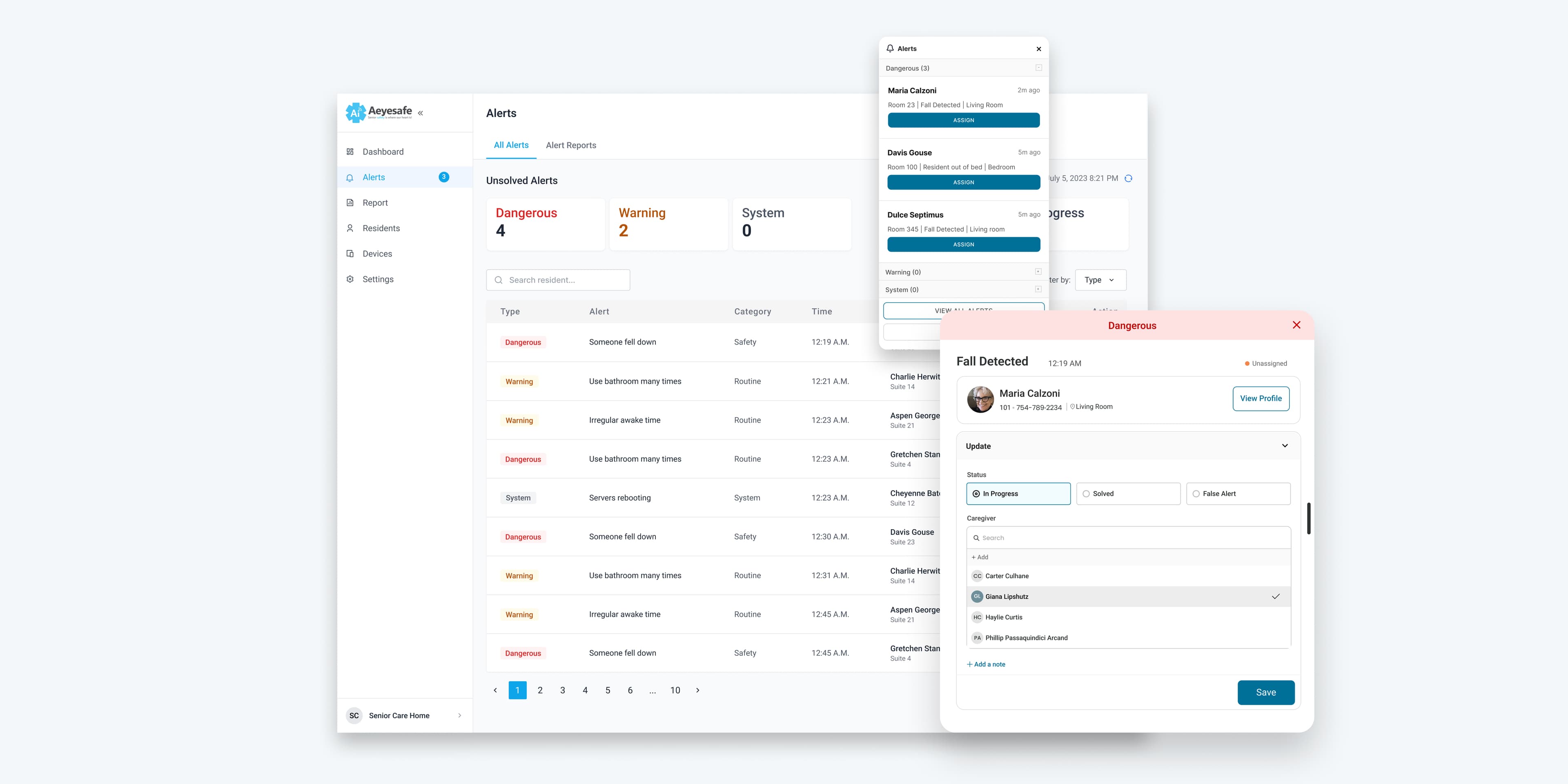
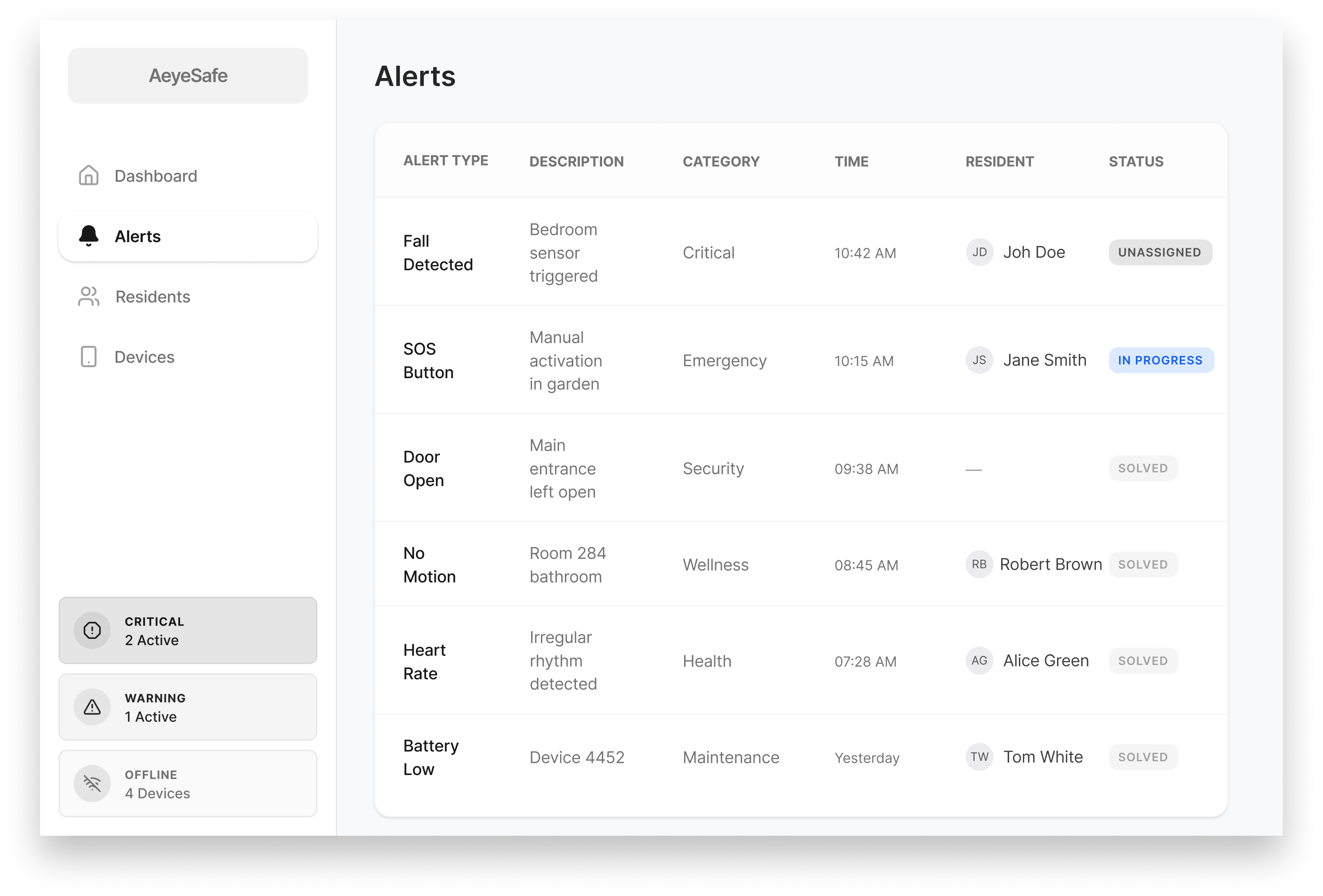
Aeyesafe uses AI-powered monitoring to identify potential safety incidents in senior care facilities. I worked on the alert experience, connecting AI-generated events with the decisions caregivers make during their shifts. Over six weeks, I designed a pilot-ready MVP focused on helping care teams assess urgency, manage multiple incidents, and coordinate response.
Problem
Aeyesafe's vision was to help caregivers identify and respond to potential safety concerns before they escalated. For that to work, safety events had to become clear, actionable workflows: caregivers needed to understand what happened, determine urgency, and coordinate response under time pressure. The MVP also needed to validate how caregivers would use the product in real care environments.
Solution
I designed an alert management experience that turned system-generated events into coordinated caregiver workflows. It focused on:
• Making critical events easy to understand and prioritize
• Making ownership and accountability clear
• Supporting response workflows across multiple surfaces
• Scaling during periods of high alert volume
Impact
• Delivered the first end-to-end workflow connecting safety events to caregiver action
• Reduced product risk by validating critical workflow assumptions early
• Created a scalable foundation for future alerting, adoption measurement, and product iteration
My Role
As the Product Designer, I:
• Led the project from opportunity framing through research, design, prototyping, and validation
• Defined how safety events would be translated into caregiver action
• Established the ownership, prioritization, and response models that shaped the alert experience
• Balanced user needs, operational workflows, and business goals to deliver a pilot-ready MVP in six weeks
01. The Problem
More alerts don't necessarily mean better care
Care teams already manage competing priorities, frequent interruptions, and time-sensitive responsibilities. AI monitoring could detect incidents earlier, but it could also become another system caregivers had to watch while doing their jobs.
A dashboard could show what was happening across a facility. It couldn't guarantee that someone would respond. I needed to understand how alerts could fit into caregivers' existing workflows without becoming another source of distraction.
02. The Insight That Changed My Direction
I started with visibility. Research pointed me toward coordination
My initial direction was a centralized alert hub where caregivers could monitor incidents across a facility. It was a reasonable starting point: bringing alerts together made information easier to find.
Caregiver feedback revealed a gap in the initial concept. A shared view made incidents easier to see, but caregivers still needed to understand which alerts were urgent, who was responding, and what action to take. I used those findings to shift the MVP toward supporting decisions within their existing workflows.
Initial direction
Monitoring alerts
How do I make alerts easier to monitor?
Revised direction
Supporting response
How do I help caregivers decide what needs attention and act on it?
03. Three Decisions That Shaped the Experience
Decision 01
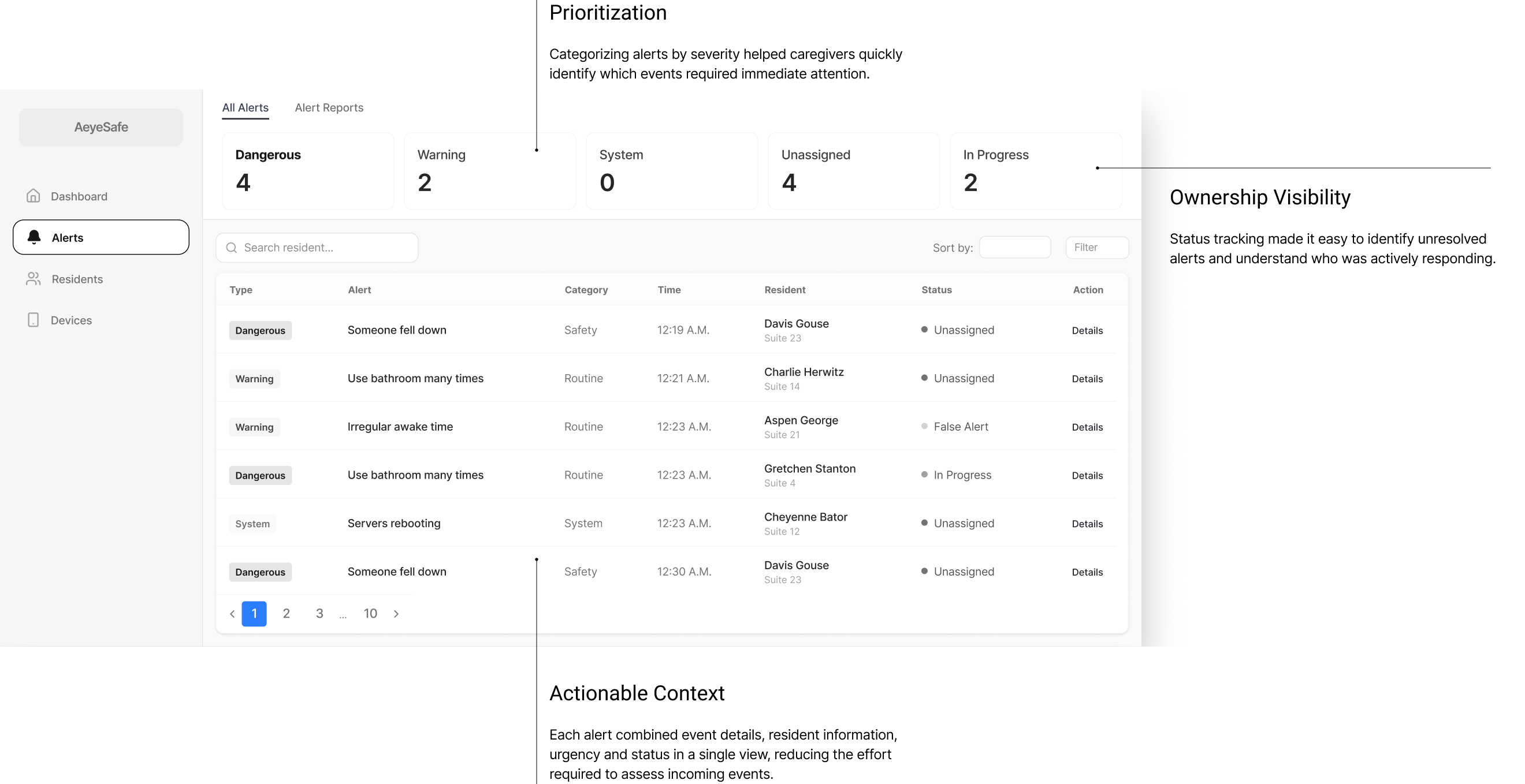
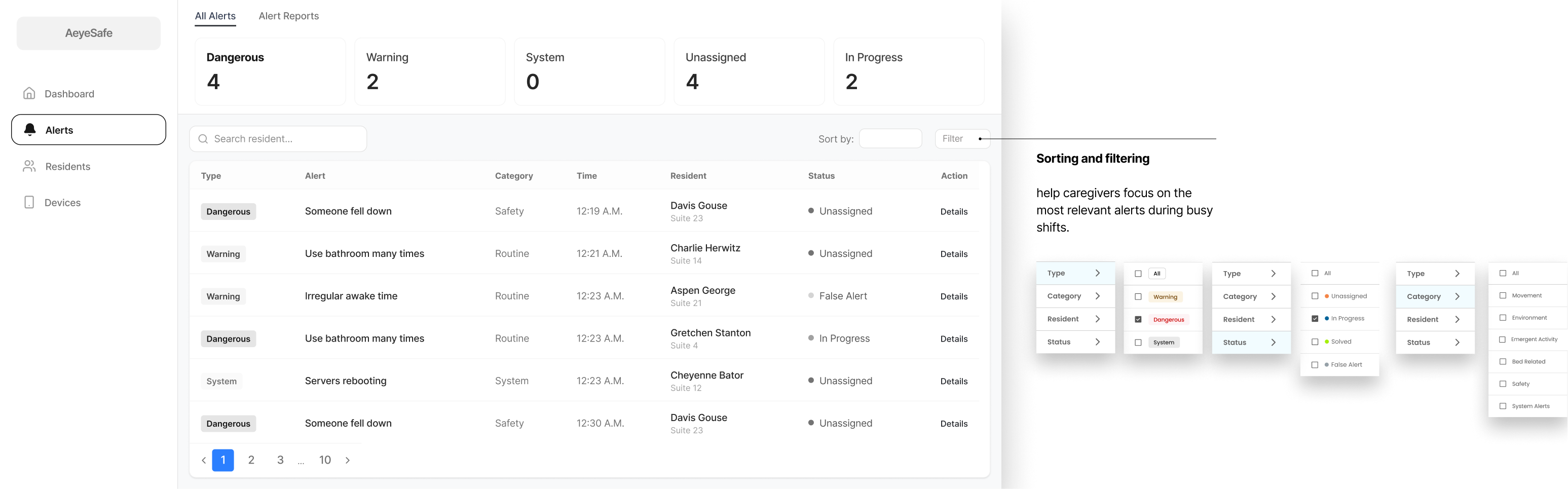
Make urgency understandable at a glance
Not every event requires the same response. If every alert had equal visual weight, caregivers would have to interpret each notification individually, even when several arrived close together. I built the information hierarchy around what happened, where it happened, and what required immediate attention, so the next decision was easier to make.
Decision 02
Design for multiple incidents, not the ideal scenario
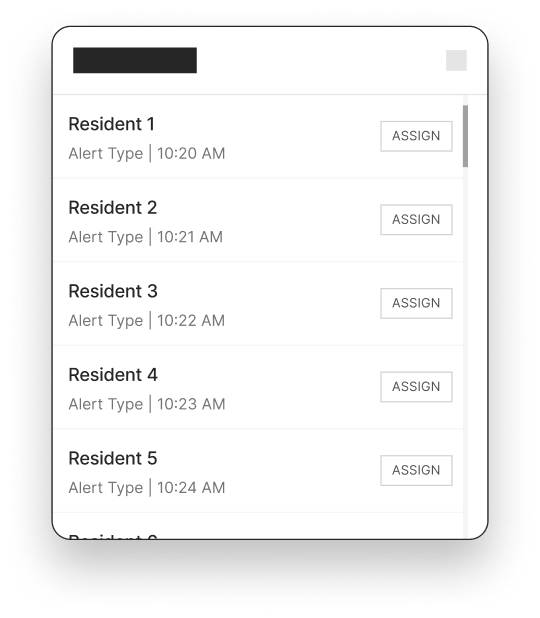
A monitoring interface can work well when only one alert is active, but real care environments are less predictable. I explored how the experience should behave when more than 15 alerts appeared within a short period, and compared three approaches.
Iteration A
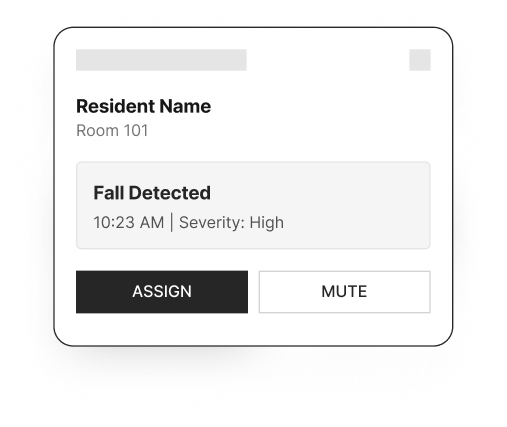
Single Pop-up
Benefit
Easy to notice when alerts are infrequent
Trade-off
Interrupts ongoing work when multiple alerts arrive
Iteration B
Expanded List
Benefit
Shows several incidents at once
Trade-off
Requires more scanning as alert volume increases
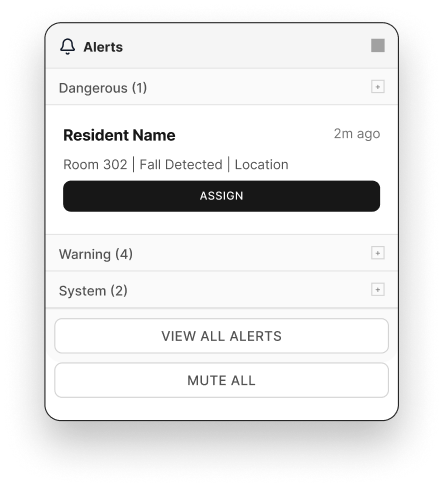
Iteration C
Selected direction
Collapsible Grouping
Benefit
Keeps multiple alerts manageable
Trade-off
Requires expanding a group to view additional details
I selected collapsible grouping because it handled simultaneous alerts without taking over the interface. Caregivers could maintain an overview of active incidents and expand groups when they needed more detail. This balanced visibility with the limited attention and screen space available during busy shifts.
Decision 03
Connect information with response
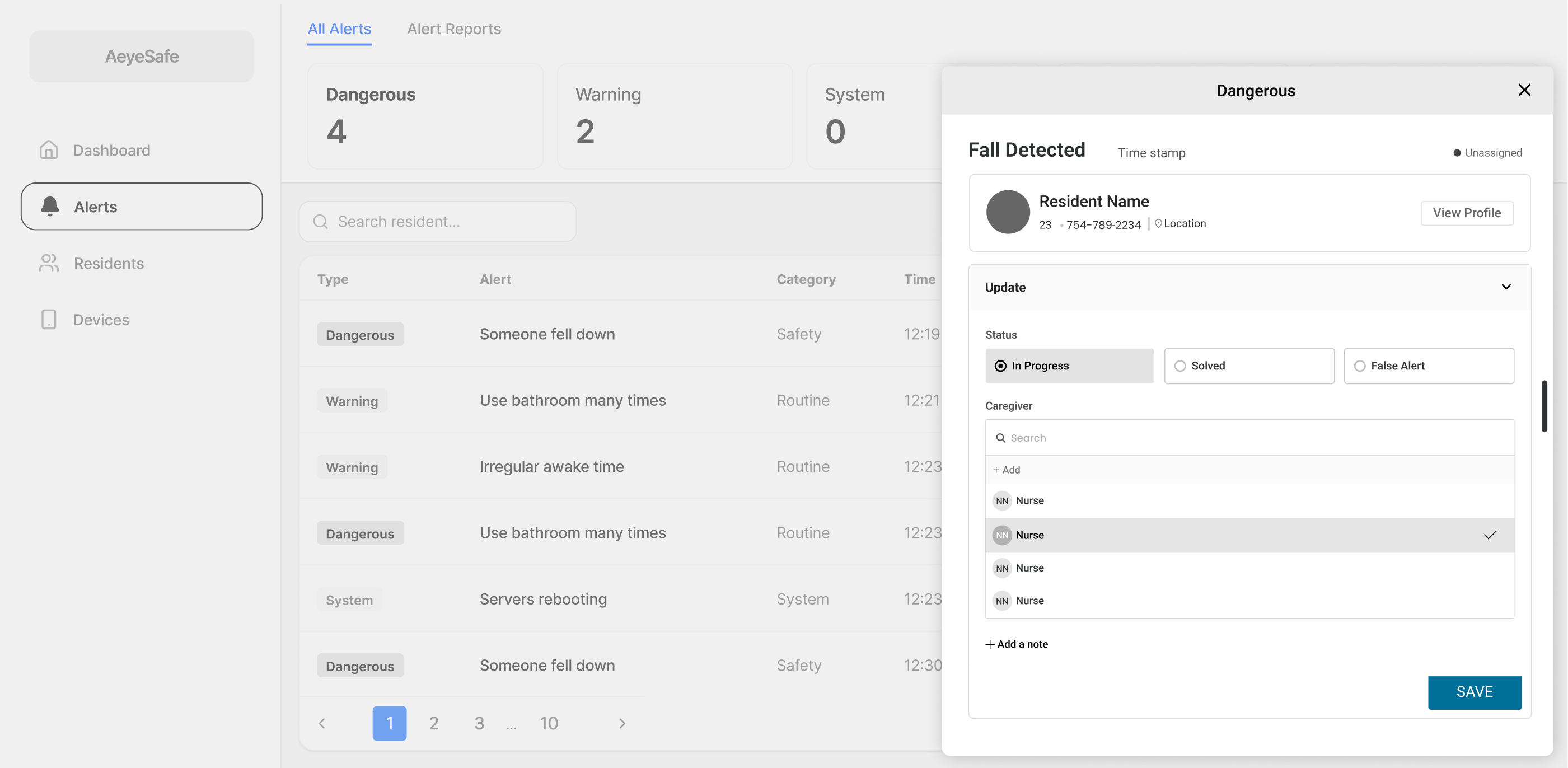
An alert is useful when it helps someone take action. I structured the experience around three questions caregivers needed to answer: what happened, how urgent it was, and who was responsible for responding. Bringing that information together helped make the next action clearer without requiring caregivers to navigate between screens.
Context
What happened?
Priority
How urgent is it?
Action
What should happen next, and who is responding?
04. Building an MVP in Six Weeks
The challenge was deciding what mattered most
Six weeks to move from discovery to a pilot-ready experience meant prioritizing hard. I focused on the interactions most closely connected to caregiver response:
Making incidents easy to recognize and assess
Helping caregivers manage multiple alerts
Connecting incident information with response actions
This gave the team a focused foundation to test the core experience before expanding the product. The timeline also shaped a product decision: validate the response workflow first, and invest in additional monitoring features later.
05. Outcomes
A pilot-ready experience designed around caregiver response
Within six weeks, we delivered a pilot-ready MVP that supported a more actionable caregiver workflow. The project established:
01
Alert prioritization
A clearer information hierarchy for AI-generated safety alerts
02
High-volume management
An approach to managing multiple simultaneous incidents
03
Response workflow
A connected experience for reviewing incidents and supporting response decisions
04
Future validation
A foundation for testing the experience with caregivers
06. Reflection
The hardest part of designing an AI monitoring product was what happened after detection
This project changed how I think about safety alerts. A technically accurate detection is only useful when the person receiving it can understand its significance and act. My most important contribution was moving the product's focus from displaying incidents to supporting the decisions that follow them, and that applies well beyond senior care: an intelligent system is valuable to the extent that it helps people make decisions in the moments that matter.