
IstoVisio · B2B · Desktop app · Science
Designed an Annotation Tool for Scientific Research
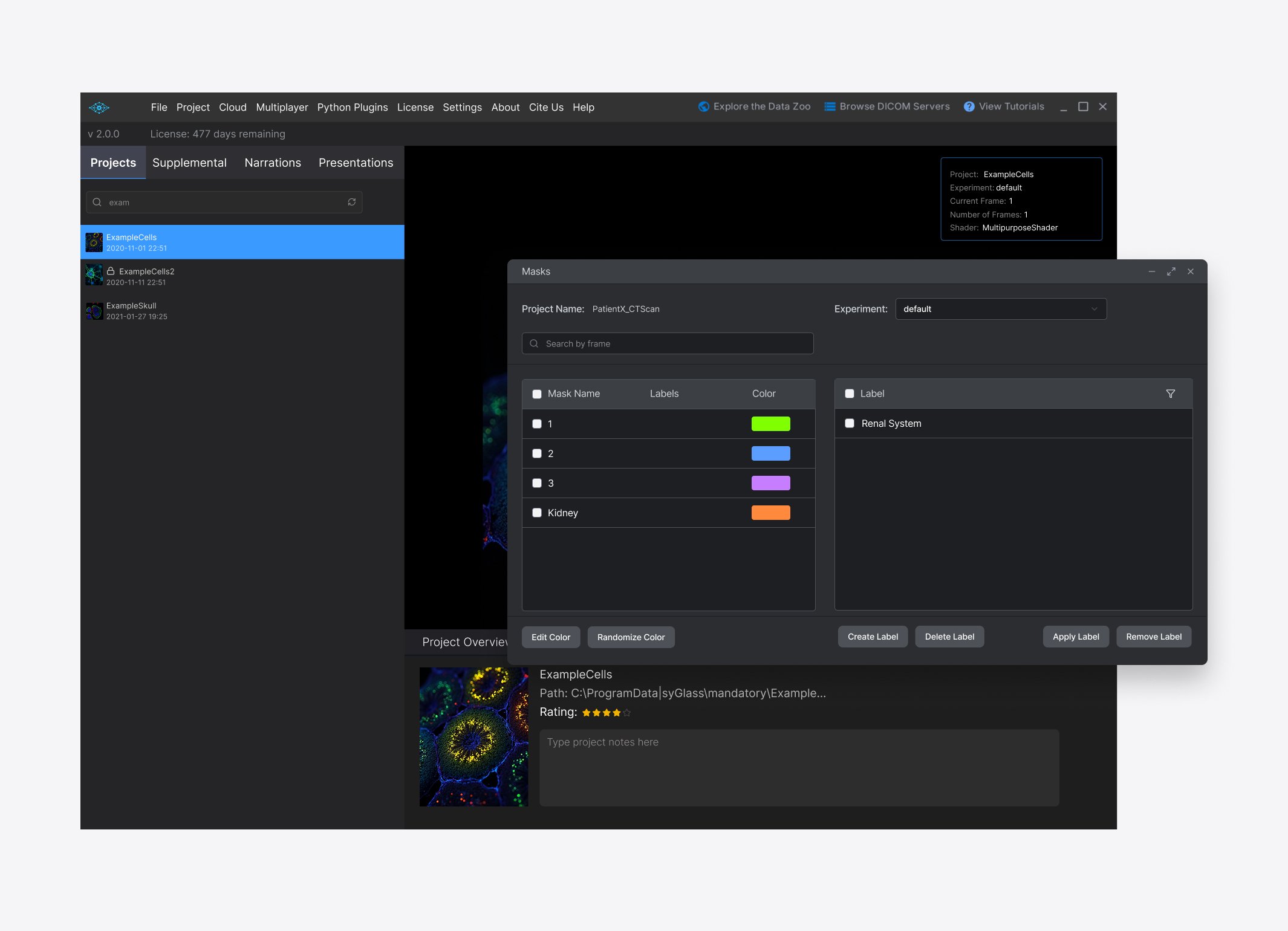
syGlass
ISTOVISIO · JANUARY 2025
OUTCOME
Helps scientists explore massive, complex datasets and reveal patterns they couldn’t see before.
I was the sole designer, and I owned the problem framing, scope, design direction, and final sign-off. I worked directly with two engineers and collaborated on feasibility, performance constraints, and trade-offs.
Reduced ~75 minutes per session by eliminating export/import steps
Shifted annotation workflows away from external tools
Enabled researchers to complete annotation and produce publication-ready outputs without leaving the platform
PROBLEM
BUSSINESS GOAL
Scientists used syGlass for data annotation, but couldn’t complete publication-ready workflows in syGlass. They had to switch tools at the final step, breaking their flow and increasing the risk of churn as competitors offered complete workflows.
Increase retention and renewal confidence by enabling scientists to complete their full annotation workflow inside syGlass, positioning the platform as an all-in-one scientific workspace rather than one step in a multi-tool pipeline.
DESICION-CHANGING RESEARCH
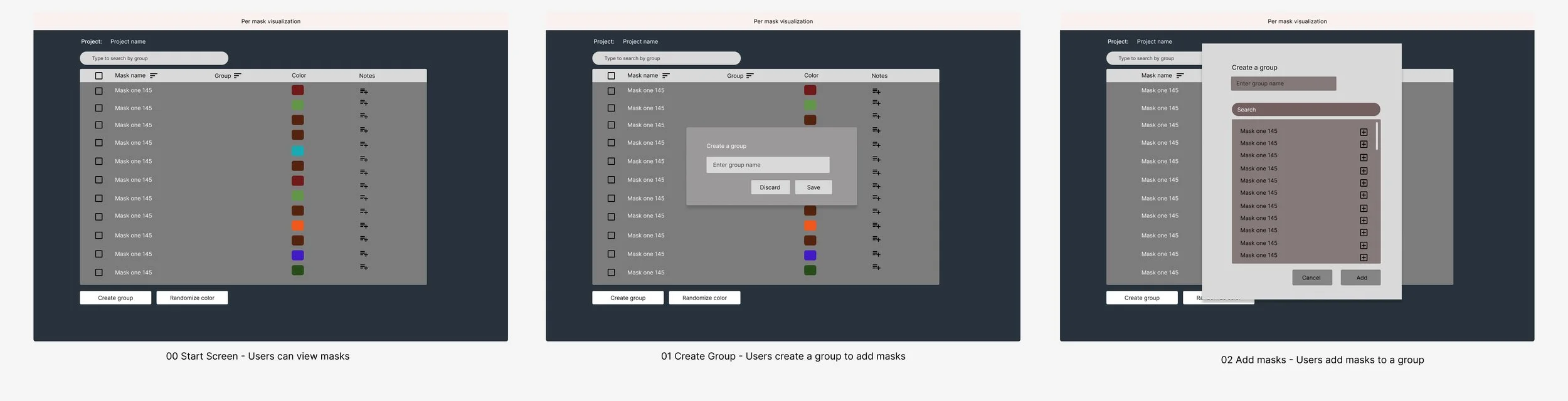
I learned that the original scope would have shipped something that technically worked, but failed in real scientific workflows. Because of this insight:
I reframed the problem from “organizing annotations” to “supporting end-to-end, evolving scientific workflows.”
The founding team believed this was a relatively simple request from power users, based on high-level customer feedback asking for better label organization.
To validate this direction, I spoke with five power users and walked them through an early Figma prototype built on the founding team’s understanding of the problem.
Success shifted from “did we ship all features?” to “does this still work when the experiment changes?”
Scope expanded in complexity, but narrowed in intent
FROM RESEARCH TO DESIGN
How might we enable users to complete their workflow entirely within syGlass?
DECIDING WHAT TO BUILD (AND WHAT NOT TO)
To balance user needs with engineering and time constraints, I made a trade-off: prioritize a focused solution over a highly flexible system.
Instead of covering every edge case, I designed for the core workflow first, creating a foundation that could scale over time.
Focused, scalable workflow (now):
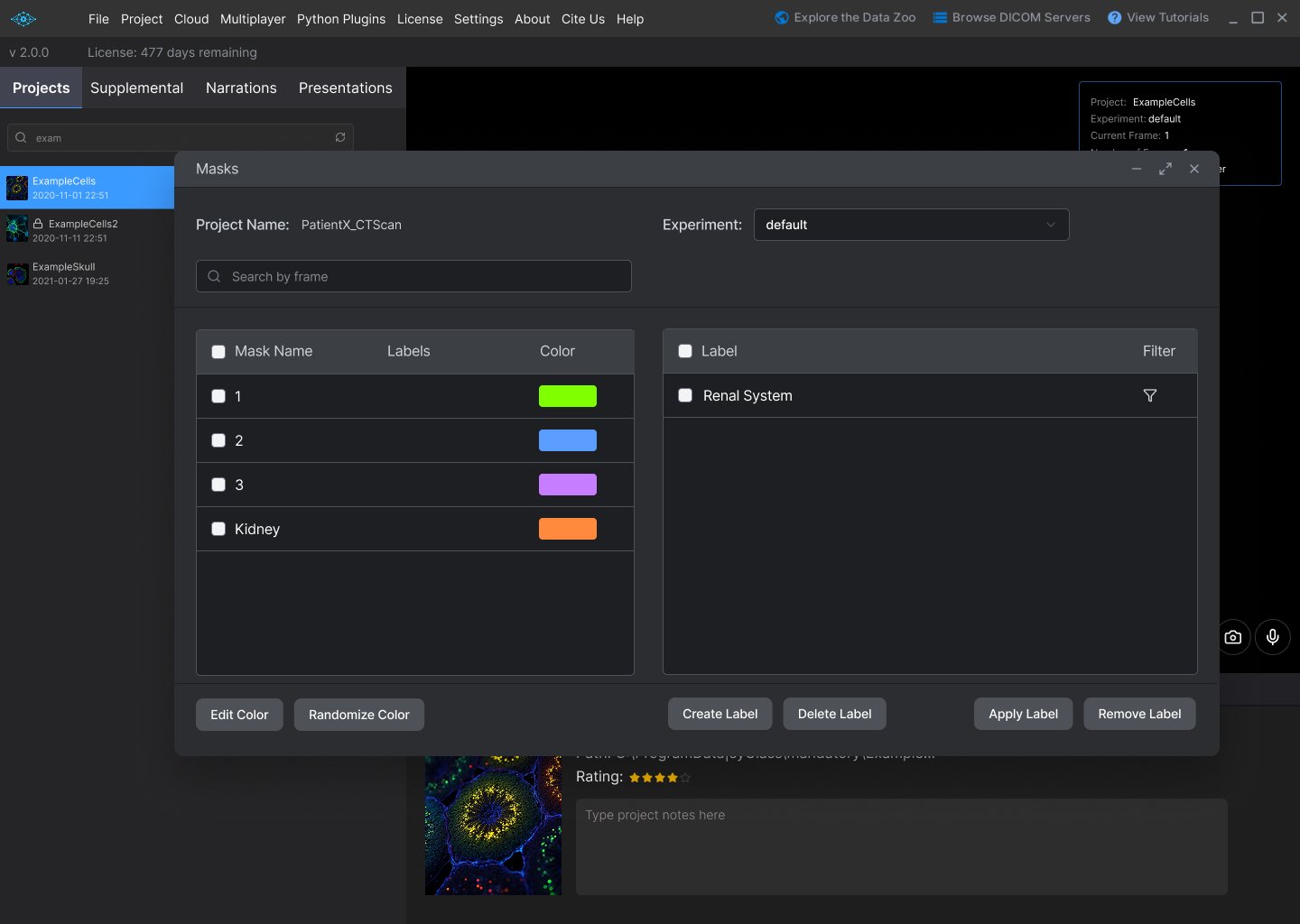
Rename masks directly in the product
Assign one clear color per mask
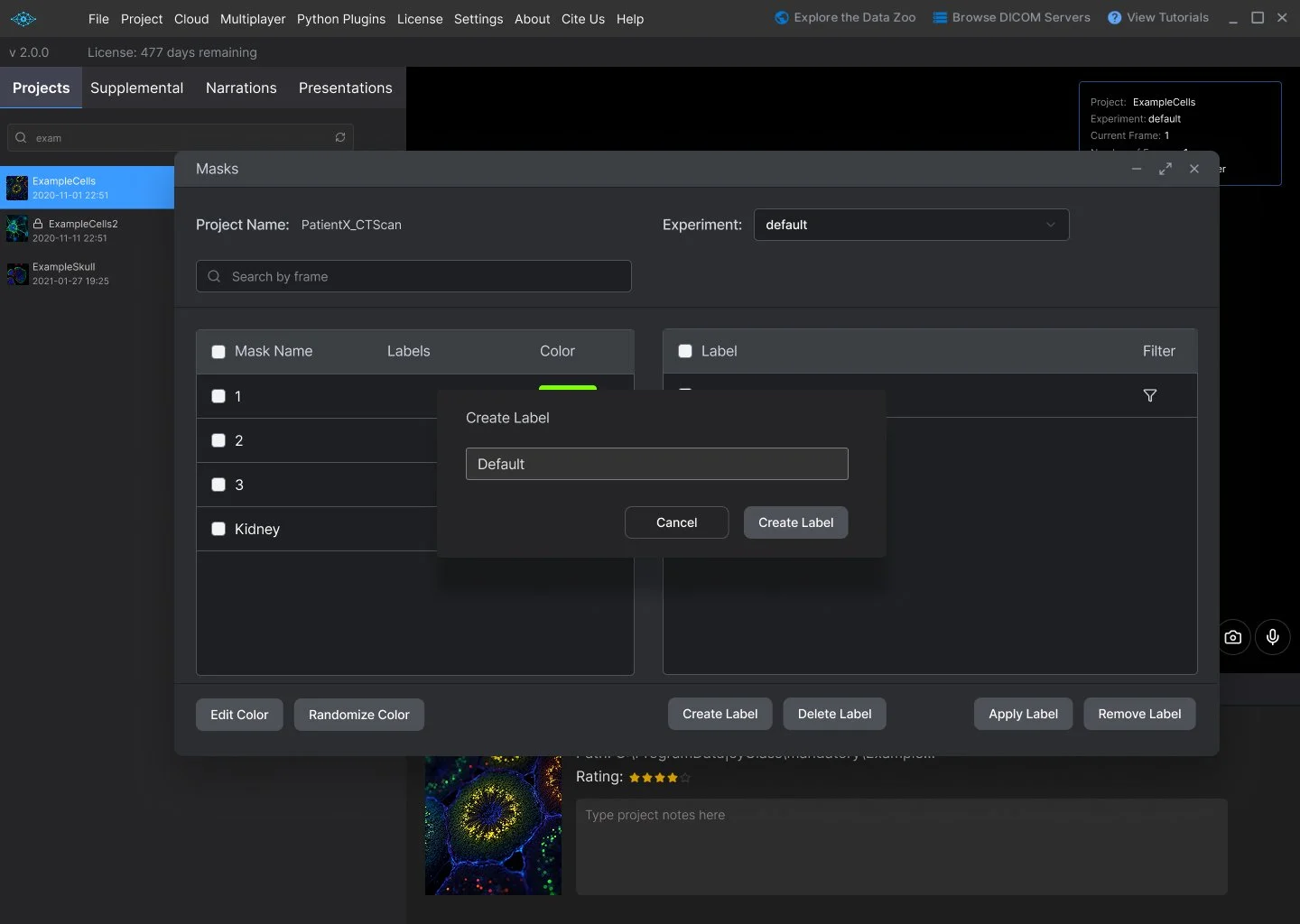
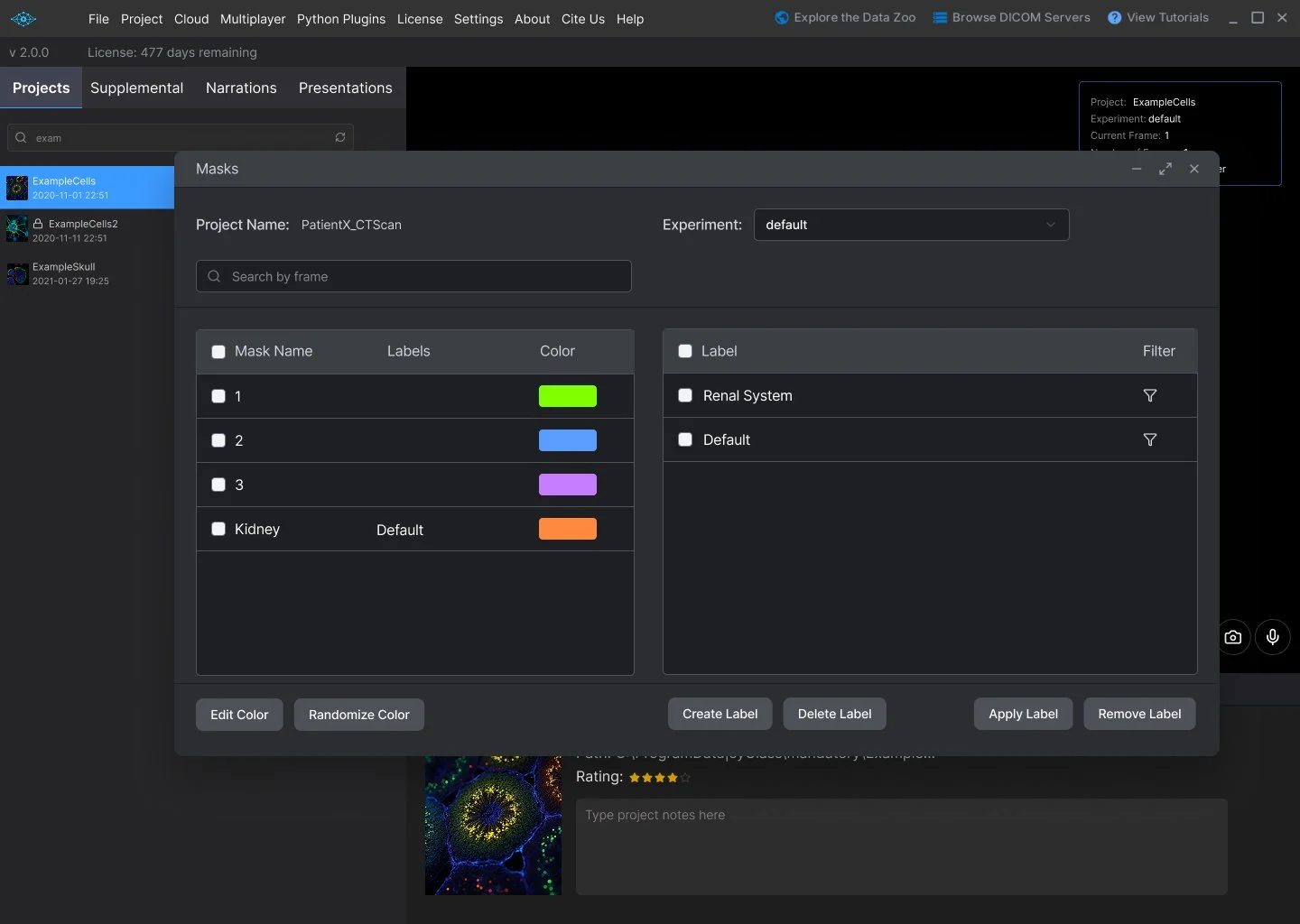
Create reusable labels and apply them to masks
Filter and search masks by name or label
Edit colors for multiple masks at once
Deferred for later:
Complex group hierarchies
Multiple colors per mask or color inheritance rules
Automated label imports
FINAL DESIGN
The final design keeps users inside syGlass by enabling a clear, reliable annotation workflow.
Predictable defaults, safe edits, and reusable annotations ensure consistency without breaking existing work.
00 STAGE - MAIN MENU
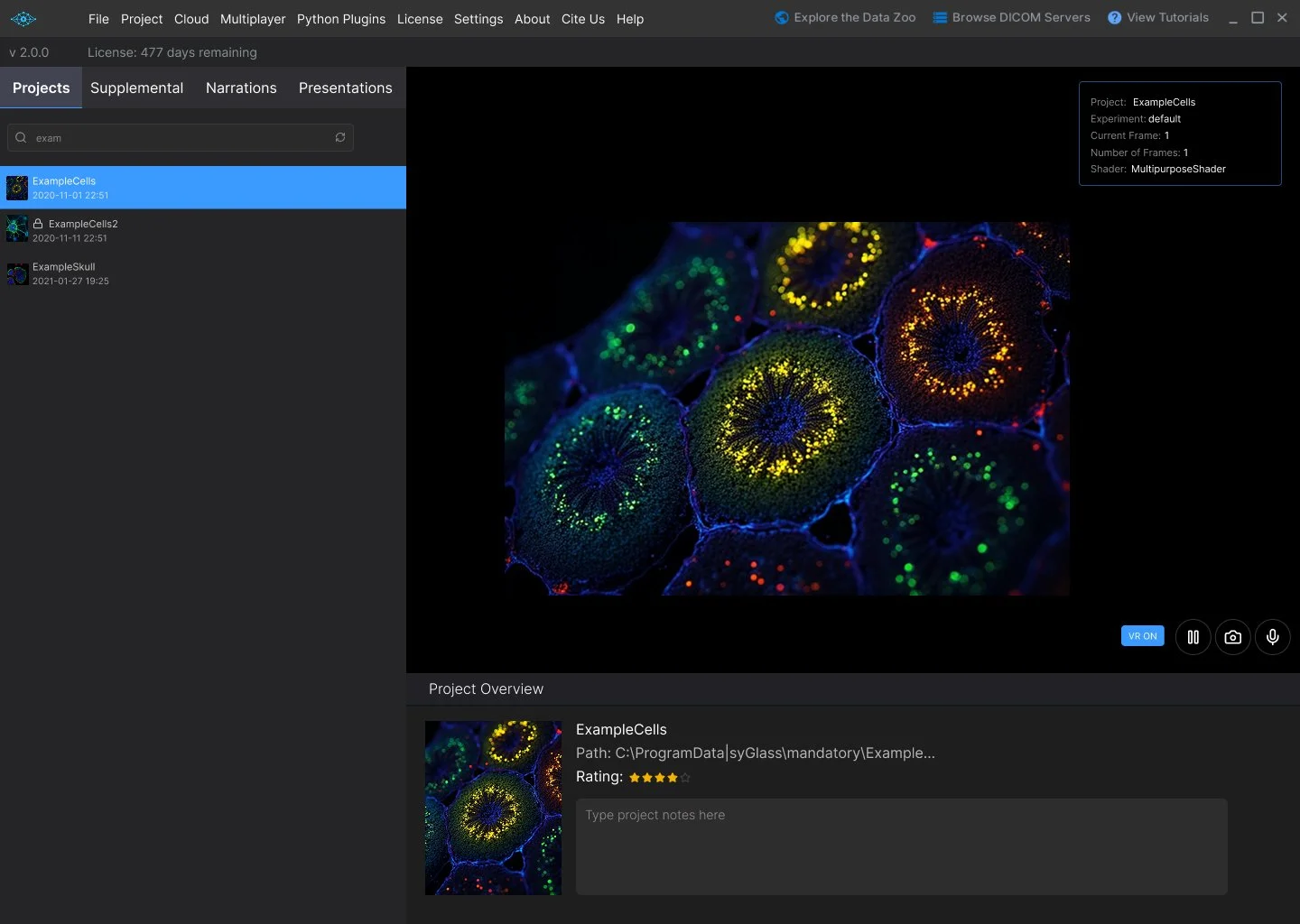
01 STAGE - NAVIGATE TO MASKS MENU
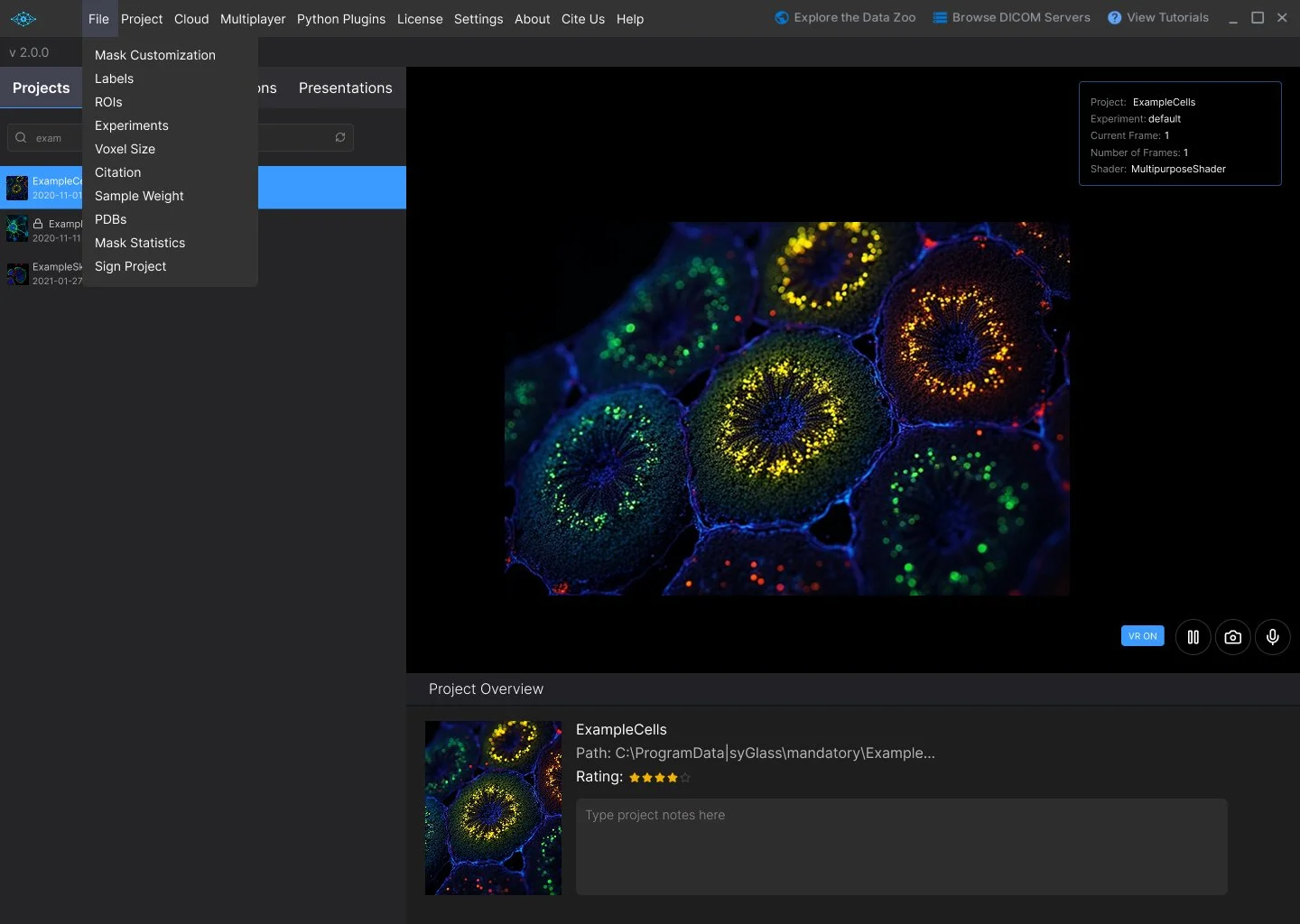
02 STAGE - MASK CUSTOMIZATION
03 STAGE - CREATE LABEL
04 STAGE - ADD LABEL TO MASK
IMPACT
Previously, syGlass supported only fragments of the annotation workflow.
This feature enabled a complete, in-platform workflow from annotation to publication.
~75 minutes saved per session by removing export/import steps
Eliminated reliance on external tools
Reduced churn risk and positioned syGlass as a true end-to-end solution
REFLECTION AND NEXT STEPS
This project defined the minimum needed to establish trust.
Next, the system can expand with advanced capabilities like customization and automation, while preserving performance, stability, and usability.